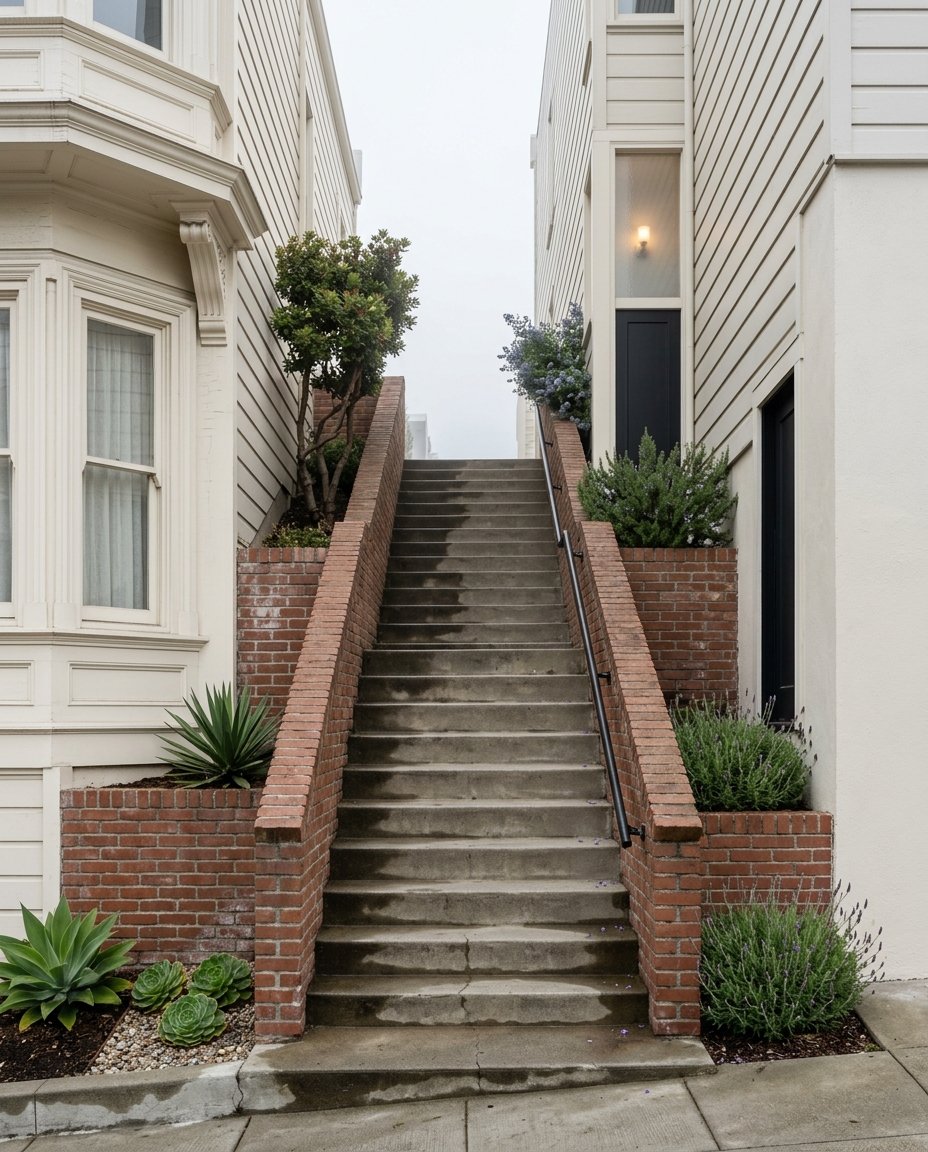
If you have ever wondered what it would feel like to live in one of San Francisco’s most distinctive hillside neighborhoods, Telegraph Hill is a place that tends to stay with you. It offers historic homes, stair-step paths, dramatic Bay and downtown views, and a daily rhythm shaped as much by the landscape as the city around it. If you are considering buying or selling here, understanding that mix of beauty and practicality matters. Let’s dive in.
Telegraph Hill has a one-of-a-kind setting
Telegraph Hill is not just a scenic San Francisco neighborhood. It is also an officially designated historic district on the northeastern slope of the hill, generally bounded by Greenwich, Sansome, Montgomery, and Green Streets, with about 100 properties inside the district boundary.
Its history is deeply tied to the city itself. The hill took its name from an 1849 signal station, and California’s first telegraph was installed there in 1853. At the summit, Coit Tower anchors Pioneer Park, adding one of San Francisco’s most recognizable landmarks to daily life in the neighborhood.
What makes Telegraph Hill stand out is how strongly the physical setting shapes the experience of living there. San Francisco planning documents describe it as one of the city’s visually distinctive hill areas, known for its hilltop park setting, small-scale buildings, stairways, walkways, and carefully framed views of the Bay and downtown.
Daily life centers on the hills
The biggest truth about living on Telegraph Hill is simple: the terrain is part of the lifestyle. This is not a flat, easy-access neighborhood where every block feels interchangeable.
Many of the public rights-of-way function more like footpaths than standard streets. In fact, planning records note that nearly half of the buildings in the district face only footpaths rather than regular streets. That creates a setting that feels unusually tucked away for such a central location.
For many residents, that pedestrian character is exactly the point. The stairs, gardens, and hillside walkways help create a sense of separation from the modern city, even though you are still close to downtown, the waterfront, and North Beach.
That said, the physical effort is real. The hill restricts auto access to a single feeder street, and parking is limited, so everyday routines often work best for people who are comfortable walking slopes and stairs on a regular basis.
Walking here feels different
Telegraph Hill rewards you with an experience that is hard to replicate elsewhere in San Francisco. You may turn a corner and suddenly get a narrow opening toward the Bay, downtown skyline, or waterfront below.
The neighborhood’s pedestrian scale also changes the pace of daily life. Instead of broad streets and long sightlines, you get intimate paths, layered gardens, and homes that follow the hillside in stepped forms.
Car access can be secondary
If you prefer a car-centric setup, Telegraph Hill may feel less convenient than other neighborhoods. Limited parking and hillside access are built into the area’s layout, not temporary inconveniences.
For the right buyer, though, that tradeoff is worth it. The neighborhood tends to appeal to people who value historic texture, views, and walkability more than flat streets and easy parking.
Homes reflect the hill’s history
One of the most compelling parts of Telegraph Hill is its architecture. The housing stock is old, compact, and strongly shaped by the topography, which gives the area a look and feel that is both layered and highly specific to place.
The neighborhood includes a large collection of early dwellings, with nearly a third of the buildings in the historic district dating to before 1870. Typical buildings are small in height and bulk, often wood-clad, and designed to step with the hillside rather than overpower it.
Architectural styles in the district include vernacular cottages, Gothic Revival, Italianate, and Classical Revival homes, along with apartment buildings in Italianate, vernacular, and late-1930s styles. You also see practical hillside features like balconies in place of bay windows, restrained ornamentation, and forms that descend with the slope.
Expect a layered streetscape
Telegraph Hill is not frozen in one architectural era. While many homes reflect the neighborhood’s early waterfront and working-era roots, the area also saw a wave of 1930s infill after road improvements, retaining walls, and the construction of Coit Tower helped raise land values.
That means you can find early cottages, later apartment buildings, and a few sleeker modern additions in the same neighborhood. For buyers, that creates a more varied housing mix than you might expect from a compact historic district.
Preservation shapes the neighborhood
Historic character is not just aesthetic here. Planning controls in the district preserve standards related to use, height, bulk, lot coverage, floor-area ratio, open space, parking, and signs.
For homeowners, that helps protect the area’s overall scale and visual identity. For buyers and sellers, it also means Telegraph Hill should be understood as a preservation-sensitive micro-market where the setting itself is a major part of long-term value.
The views are a daily luxury
Telegraph Hill is famous for its outlooks, but what makes the views special is how they appear. They are often revealed through narrow openings, stair landings, and hillside edges rather than broad, predictable panoramas.
That creates a lived-in kind of drama. You are not simply near a view. In many parts of the neighborhood, the relationship between the homes, walkways, and landscape makes the view part of your daily routine.
The city’s planning framework specifically emphasizes preserving views from the hill while maintaining the physical form of Telegraph Hill and the waterfront around it. That reinforces how central the visual experience is to the neighborhood’s identity.
Transit and access are better than you might think
Although Telegraph Hill feels tucked away, it is not disconnected. SFMTA’s 39 Coit provides curbside service to Coit Tower and connects through nearby neighborhoods including North Beach, Chinatown, the Financial District, Nob Hill, Russian Hill, and Fisherman’s Wharf.
That can be a meaningful advantage if you want the character of a hillside neighborhood without giving up city access. Downtown rail options are also nearby through BART’s Embarcadero and Montgomery Street stations, both connected to Muni in the Financial District.
For many residents, this mix is part of the appeal. You get a residential environment that feels separate from the city’s faster pace, while still staying within reach of major business, transit, and waterfront areas.
North Beach and the waterfront are close by
One of the practical perks of Telegraph Hill is what surrounds it. The neighborhood sits right next to North Beach, which is known for its long-standing restaurant culture and strong Italian-American roots.
That puts a wide range of dining and café options within easy reach. San Francisco Travel specifically highlights nearby spots such as Tony’s Pizza Napoletana, Cafe Zoetrope, and Original Joe’s.
You are also close to the city’s waterfront visitor corridor. Fisherman’s Wharf and nearby attractions include PIER 39, Aquarium of the Bay, historic ships at Hyde Street Pier, sea lions, boat tours, and the SkyStar Observation Wheel.
A central location with a tucked-away feel
This is one of Telegraph Hill’s best qualities. You can be near some of San Francisco’s busiest and most visited destinations, yet still come home to a neighborhood that feels intimate, elevated, and quieter in character.
That contrast is not accidental. It comes from the hill’s topography, stairways, and small-scale buildings, which create separation even in a central part of the city.
Who tends to love living on Telegraph Hill
Telegraph Hill is usually a strong fit for buyers who want more than a convenient address. It tends to resonate with people who value atmosphere, historic character, and a home that feels deeply connected to its setting.
You may especially appreciate living here if you are looking for:
- A neighborhood with preserved historic texture
- Low-rise homes and apartments with architectural variety
- Stairway walks and pedestrian paths
- Bay, waterfront, or downtown views
- Easy access to North Beach, downtown, and the waterfront
- A less car-dependent daily routine
On the other hand, if your priority is simple parking, flat blocks, and quick door-to-door car access, Telegraph Hill may feel less practical than other San Francisco neighborhoods.
What buyers and sellers should keep in mind
For buyers, Telegraph Hill is a neighborhood where lifestyle fit matters as much as square footage. The stairs, access patterns, preservation context, and view-oriented setting all shape how a home lives day to day.
For sellers, the neighborhood’s value often comes from a combination of location, historic character, architectural details, and the unique emotional pull of the hillside setting. Presentation matters here because buyers are often responding to both the home and the surrounding experience.
In a nuanced San Francisco micro-market like Telegraph Hill, local knowledge can make a real difference. Understanding how buyers respond to topography, access, views, and historic character helps you position a property more effectively or evaluate one with clearer eyes.
If you are thinking about buying or selling on Telegraph Hill, working with a neighborhood-savvy advisor can help you weigh the tradeoffs and spot the details that matter most. To start the conversation, connect with Claudia Siegel.
FAQs
What is Telegraph Hill like for everyday walking in San Francisco?
- Telegraph Hill is highly walkable in a pedestrian sense, but it is also steep. Many routes include stairs, footpaths, and hillside walkways rather than standard flat streets.
What kinds of homes are common on Telegraph Hill?
- Telegraph Hill is known for small-scale, low-rise homes and apartments, including early cottages, Italianate and Classical Revival buildings, vernacular structures, and some later 1930s infill.
Is parking easy on Telegraph Hill?
- Parking can be limited. Planning documents note restricted auto access and limited parking, so the neighborhood often works best for people comfortable with a less car-focused setup.
How close is Telegraph Hill to North Beach and the waterfront?
- Telegraph Hill sits next to North Beach and is also close to waterfront destinations like Fisherman’s Wharf, PIER 39, and other Embarcadero-area attractions.
Does Telegraph Hill have public transit access?
- Yes. The 39 Coit serves the area around Coit Tower, and nearby downtown access includes BART stations at Embarcadero and Montgomery Street, both connected to Muni.
Why do buyers consider Telegraph Hill in San Francisco?
- Buyers are often drawn to Telegraph Hill for its historic character, dramatic views, pedestrian feel, preserved small-scale architecture, and central location near downtown and the waterfront.