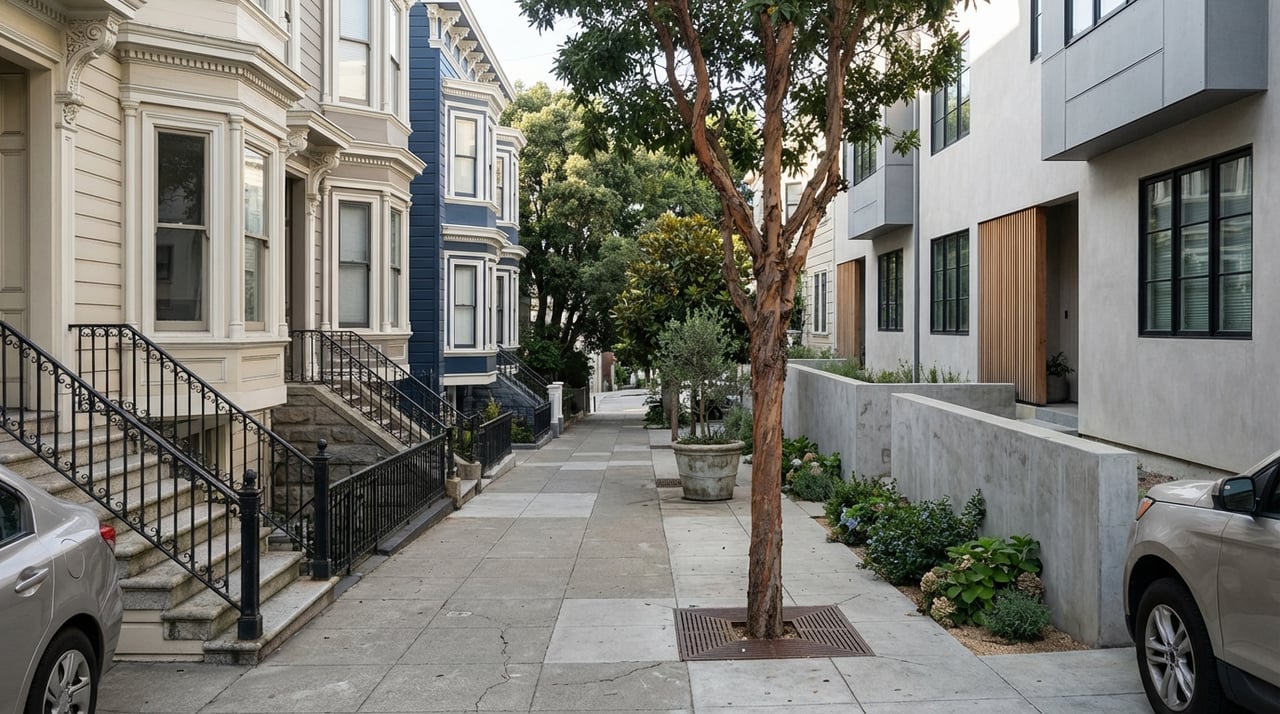
Torn between Bernal Heights and Noe Valley? You are not alone. Both offer sunshine, village energy, and strong access to the rest of the city, yet the day-to-day experience can feel very different. In this guide, you will compare hills and microclimate, parks and play spaces, commute options, daily errands, and current prices so you can see which neighborhood fits your lifestyle and budget. Let’s dive in.
Bernal Heights vs. Noe Valley at a glance
Bernal Heights snapshot
Bernal Heights sits on and around Bernal Hill, just south of the Mission, with a small-town feel and a tight commercial core on Cortland Avenue. It is often described as a village within the city, with wood-frame single-family homes, Victorians, bungalows, and modern infill that take advantage of hillside views. The neighborhood’s steep blocks deliver panoramas and character, and the hilltop park is a daily draw for walkers and runners. For a quick orientation, see the neighborhood overview on Bernal Heights’ Wikipedia page.
Noe Valley snapshot
Noe Valley sits in a true valley south of the Castro and north of Glen Park, with 24th Street as its main commercial corridor. The area is widely noted for its calmer, sunnier microclimate and a high concentration of Victorian and Edwardian rowhouses alongside renovated homes and modern builds. The core blocks are gentler underfoot, which makes daily walking easier for many households. Explore the basics on Noe Valley’s Wikipedia page.
Topography and microclimate
Bernal Heights’ identity is tied to the hill itself. The summit reaches roughly the mid-400-foot range, which shapes the neighborhood’s steeper streets, big sky, and sweeping outlooks. Those grades deliver views but can make biking, strollers, and everyday walks more of a workout. For elevation context, see PeakVisor’s Bernal Hill profile.
By contrast, Noe Valley’s position below Twin Peaks helps block fog and wind, creating a locally sunnier, calmer pocket than many parts of the city. Within the valley, streets are generally more gradual, especially near 24th Street, while the western edges climb toward Twin Peaks. That layout often makes local trips feel simpler on foot for many residents, especially when carrying groceries or pushing a stroller.
Bottom line: If you want hillside drama and views, Bernal delivers. If you want gentler grades and a consistent sunny pocket, Noe is hard to beat.
Parks and outdoor life
Bernal Heights has an iconic, everyday backyard in Bernal Heights Park. You get winding trails, open slopes, and skyline viewpoints that locals use for daily walks, runs, and fresh-air breaks. For a quick look at trail access and terrain, preview the Bernal Heights Park trail overview. Precita Park and Holly Park offer play areas and green space close to homes, and the long-running Alemany Farmers’ Market at the neighborhood’s southeast edge adds easy weekend shopping.
Noe Valley clusters its public spaces around community hubs. Douglass Park offers multi-level play areas, courts, and open space, and has long served as a local gathering spot, as noted in Noe Valley Voice coverage of Douglass Park. The Noe Valley Town Square anchors Saturday routines with a weekly farmers market, and the Upper Noe Recreation Center adds indoor-outdoor programming. Larger nature and views are close by at Glen Canyon and Billy Goat Hill.
What this means for you:
- Prefer sweeping hilltop trails and daily skyline viewpoints. Bernal Heights makes that easy.
- Prefer structured playgrounds, a central town square, and a weekly market rhythm. Noe Valley fits that pattern.
For current or planned park improvements across the city, you can scan SF Rec & Park’s project page.
Getting around and commute options
Both neighborhoods are highly walkable, though transit footprints differ.
- Noe Valley benefits from the J‑Church Muni line along Church Street, plus multiple bus routes that cross 24th Street. The 24th St. Mission BART station is a short walk for many residents near the eastern side, creating direct access to downtown and the East Bay. For service context, see SFMTA’s notes on J‑Church service.
- Bernal Heights concentrates transit along its edges, especially near Mission Street and 24th Street, and around Glen Park where BART provides regional connections. If you plan to drive to the Peninsula, access to US‑101 and I‑280 is straightforward from many parts of Bernal. For station details, check the Glen Park BART page.
Walkability snapshots rate both neighborhoods highly. For a quick feel of block-by-block walks and transit access in Bernal, see this Walk Score overview. If commute time matters, test your exact route at your peak hours on Muni, BART, or by car before you decide.
Shops, dining, and daily errands
Noe Valley’s 24th Street is a classic main street with cafés, bakeries, boutiques, independent bookstores, and a grocery option that anchors weekly routines. The weekly farmers market at the Noe Valley Town Square creates a dependable rhythm for local shopping and community time.
Bernal Heights centers daily life on Cortland Avenue, with cafés, neighborhood restaurants, and small shops that meet everyday needs. You also have quick spillover into the Mission’s broader dining scene, plus the Alemany Farmers’ Market nearby on weekends. Bernal’s food spots continue to draw attention in local press such as Eater SF’s citywide guide, which often features destinations in and around the neighborhood.
Market snapshot: prices and pace
As of January 2026, neighborhood market snapshots report the following medians:
- Bernal Heights: median sale price around 1.45 million dollars, roughly 1,200 dollars per square foot, and a median of about 14 days on market.
- Noe Valley: median sale price around 2.25 million dollars, roughly 2,000 dollars per square foot, and a median of about 19 days on market.
Interpretation: Noe’s median sits meaningfully higher, often reflecting a larger share of family-sized single-family homes and yards within a sunny, central pocket. Bernal offers strong value for view homes and a hilltop setting at a somewhat lower overall median. Both areas are typically competitive, with well-prepared listings moving quickly. For a specific property, ask your agent for current MLS comps and recent neighborhood micro-trends around your target blocks.
How to choose: a simple framework
Use this four-step approach to make a clear, confident decision.
1) Define your non-negotiables
- Budget range: Under roughly 1.6 million dollars often opens more Bernal options than Noe. If you need 2,000 plus square feet and a yard, plan for Noe-level pricing.
- Commute mode: Do you prioritize Muni light rail or BART, or is freeway access your anchor. Test the J‑Church, a 24th Street BART walk, Glen Park BART, or your driving route at your peak time.
- Mobility: If steep blocks are a concern, focus on lower-slope Noe corridors. If daily hill walks and views excite you, lean Bernal.
- Outdoor routine: Choose between a big hilltop park for runs and dog walking in Bernal, or structured playgrounds and a weekly town square market in Noe.
2) Check inventory fit
- Ask your agent for 6 to 12 months of sold comps in your micro-areas of interest. Compare price per square foot, lot size, parking, and any permitted remodel history.
- Focus on the blocks you will use every day. North Bernal near the Mission corridor feels different from Cortland’s hill streets. Lower-slope Noe near 24th Street differs from the hillier western edge.
3) Field test your routine
- Visit both neighborhoods at three times: weekday morning, weeknight early evening, and weekend midday.
- Time your walk to the nearest coffee, grocer, playground, and your preferred transit stop.
- Drive or ride your actual commute. Note parking patterns and block-level noise.
- Check daylight on the blocks you like. Hills can shape sun and shade.
4) Final checks before an offer
- Confirm school boundaries, childcare options, and waitlists through official sources if that matters for your household.
- Review any public works or transit projects that could affect your street in the near term. You can scan SF Rec & Park improvements and SFMTA notices for corridor updates.
- If parking is important, confirm Residential Permit Parking rules for your exact block.
Who each neighborhood often fits
- Tech or Peninsula-bound commuters who want quick freeway access and big-sky views may find Bernal Heights a strong match.
- Households that want flatter daily walks, a sunny pocket, and a main-street rhythm often gravitate to Noe Valley.
- Active outdoor enthusiasts who like short hill hikes and dog-friendly routines may prefer Bernal’s hilltop park network.
- Shoppers who want a weekly farmers market and a central town square often feel at home in Noe.
Ready to compare on the ground?
Choosing between two good options is a great place to be. If you want a clear plan, local comps, and on-the-ground guidance that matches your lifestyle and budget, reach out to Claudia Siegel. You will get a tailored neighborhood tour, a pricing strategy grounded in current data, and step-by-step support to secure the right home.
FAQs
What is the main difference in terrain between Bernal Heights and Noe Valley?
- Bernal’s steep hill streets create big views and more strenuous walks, while Noe’s central valley blocks are generally gentler and easier for daily errands.
How do transit options compare for commuting to downtown San Francisco?
- Noe Valley has the J‑Church light rail and easy access to 24th St. Mission BART for downtown trips, while Bernal residents often tap buses on the edges and Glen Park BART for regional travel.
Which neighborhood has more hilltop park access vs structured playgrounds?
- Bernal Heights features Bernal Heights Park with trails and viewpoints, plus Precita and Holly Parks, while Noe Valley offers Douglass Park, Upper Noe Rec Center, and a Town Square that hosts a weekly farmers market.
How do median sale prices compare as of January 2026?
- Bernal Heights’ median is about 1.45 million dollars, while Noe Valley’s median is about 2.25 million dollars, with both neighborhoods showing competitive days on market.
Which area offers better freeway access for Peninsula commutes?
- Many Bernal Heights locations provide quick connections to US‑101 and I‑280, which can be an advantage for South Bay or Peninsula commuters.