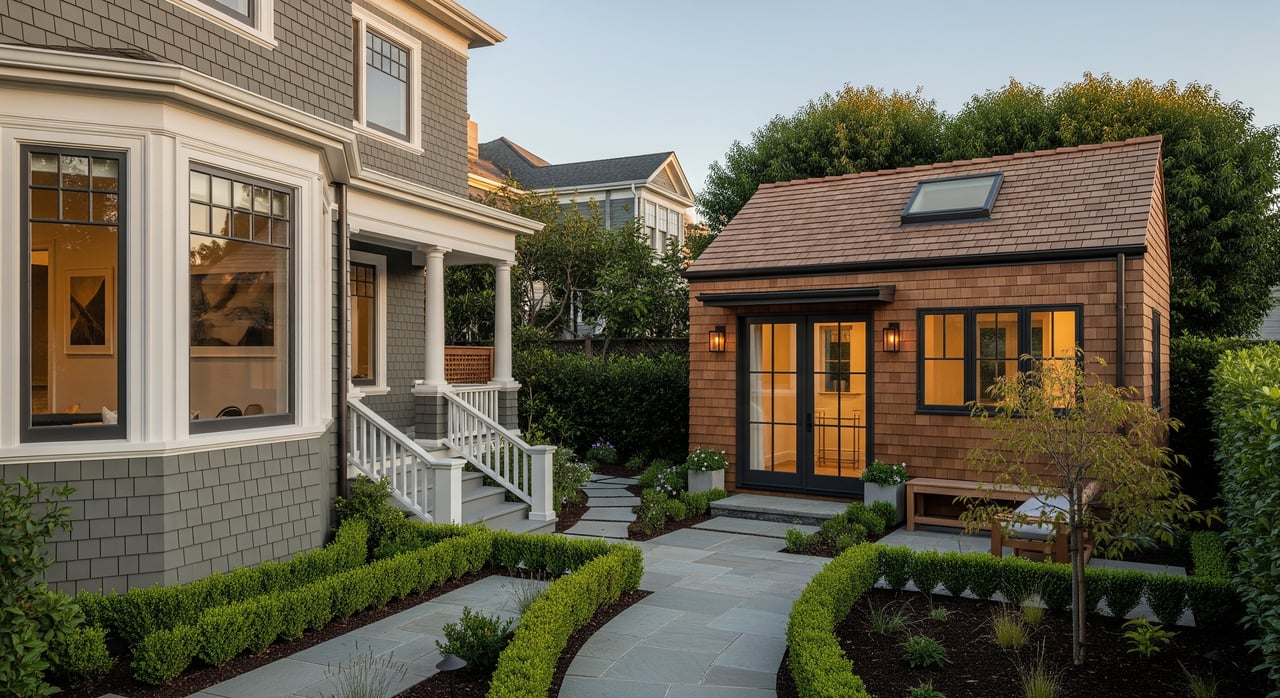
Thinking about turning your underused garage or extra room into a rental or in‑law space? In West Portal, a well‑planned ADU or JADU can add flexibility, potential income, and long‑term value, but the rules and steps can feel confusing. You want clear guidance that fits San Francisco’s process and the realities of West Portal lots. This guide breaks down what counts as an ADU versus a JADU, how permits work in San Francisco, what to consider on typical West Portal properties, and how to get started with confidence. Let’s dive in.
ADU vs. JADU: What they mean
An Accessory Dwelling Unit (ADU) is a secondary home on your property with independent living facilities, including sleeping, cooking, and sanitation. ADUs can be created by converting interior space, attaching an addition, building a detached unit, or converting an existing accessory structure like a garage or basement.
A Junior Accessory Dwelling Unit (JADU) is smaller and must be created within the existing single‑family residence. By state definition, a JADU is limited to a maximum of 500 square feet, typically includes an efficiency kitchen, and has a separate entrance. JADUs are a practical way to add a compact living space without expanding the home’s footprint.
Local rules are shaped by state law and San Francisco’s objective standards. Size, height, and setback limits vary, so always verify what applies to your address before you draw up plans.
Common forms in San Francisco and West Portal
- Garage conversion: Often the most cost‑efficient option if the space and structure allow. Converting an attached or detached garage can deliver a self‑contained unit with a separate entry.
- Interior conversion: Turning a basement, attic, or large bedroom into a separate unit. This can be a good candidate for a JADU when kept under 500 square feet within the existing home.
- Attached addition: Building out or up to create a separate unit. Feasibility depends on lot coverage, rear‑yard rules, and design standards.
- Detached new ADU: A backyard cottage or small house on the lot. Works best on deeper lots with utility access and room to meet setback and open‑space requirements.
How ADU permits work in San Francisco
State law requires that many ADUs be approved ministerially when they meet objective standards. San Francisco has adopted objective rules that allow qualifying ADUs to move through a streamlined, staff‑level review. Projects that do not meet those standards, or that involve designated historic properties, typically require discretionary review.
Here is the general sequence you can expect:
- Pre‑check and zoning verification with the San Francisco Planning Department. Confirm your zoning, allowable unit types, lot coverage, and any historic controls.
- Building permit application with the Department of Building Inspection (DBI). Submit plans and compliance documents, including Title 24 energy forms and relevant structural, mechanical, plumbing, and electrical details.
- Utility and site work approvals. Coordinate sewer and water connections and involve Public Works if curb or sidewalk changes are needed.
- Inspections and final occupancy. DBI and other agencies verify compliance before granting final sign‑off.
Practical permit issues to expect
- Objective standards and design review: Meeting objective dimensional and zoning standards keeps you in the ministerial lane. Historic properties may trigger additional review.
- Parking: State law limits how cities can require parking for ADUs. San Francisco often waives parking requirements in transit‑rich areas, and West Portal has Muni service including the K Ingleside line. Confirm the rules for your specific address.
- Building code upgrades: Garage and basement conversions often require seismic, egress, insulation, and fire‑safety upgrades. Sprinklers may be needed depending on scope.
- Utilities and sewer: Sewer lateral capacity, water service, and electrical panel upgrades can influence cost and feasibility.
- Timeline: A straightforward interior or garage conversion that meets objective standards might take a few months for permit review, followed by 3 to 9 months of construction. Projects with discretionary review, historic approvals, or complex utility work take longer.
Fees and compliance in brief
Expect DBI application and plan‑check fees, possible utility connection fees, and Title 24 energy compliance costs. Historic review fees may apply for designated properties. Fee schedules and rules change, so verify current guidance with Planning and DBI before you budget.
West Portal lot and garage realities
West Portal includes a mix of single‑family homes, rowhouses, and small apartment buildings with a neighborhood commercial corridor. Lots are often narrow and deep. Many homes have garages under the house or detached at the rear. These patterns shape which ADU approaches pencil out.
- Garage and interior conversions are often the most feasible options. They reuse the existing footprint, simplify entries, and can avoid the complexity of new detached construction on tight lots.
- Topography matters. Hills and slopes can add foundation, drainage, and staging costs.
- Historic and design context counts. If your property is a landmark or within a historic district, design changes can be more tightly controlled.
- Transit and parking: With nearby Muni service, many West Portal properties are in transit‑rich areas where ADU parking requirements are reduced or waived. This can help feasibility and resale when adding parking is not practical.
How your garage setup affects the plan
- Rear detached garage via alley: A strong candidate for a detached ADU or conversion because you can often create a private entry. Utilities may be longer runs and can add cost, and alley access can involve Public Works considerations.
- Attached under‑house garage: A better fit for an internal conversion or integrated ADU. Expect structural work, fire separation, and egress upgrades.
- Narrow, front‑facing one‑car garage: Usable, but layout and depth can be tight. You may need to extend livable space into the rear or reconfigure to meet livability and code standards.
- No garage or accessory structures: A new detached ADU or an addition is possible if setbacks and open space allow, but this is typically more complex and costly.
Will an ADU help your resale?
A well‑built ADU can widen your buyer pool and enhance long‑term value. Buyers appreciate flexible space for multigenerational living or rental income. Separate entries and modern systems tend to be valued by appraisers and buyers alike.
There are trade‑offs to weigh. Some buyers do not want landlord responsibilities and may discount properties with tenant history. If you convert your garage, losing off‑street parking can reduce appeal for buyers who prioritize parking in San Francisco. Exterior changes that conflict with neighborhood character can also limit interest.
Adding an ADU generally increases market value, which can affect your property tax assessment. For specific tax outcomes, connect with the San Francisco Assessor’s Office or a tax professional.
Renting your ADU in San Francisco
Local rental rules are nuanced. Many newly constructed units are not covered by San Francisco’s rent control, but coverage depends on several factors. Confirm your situation with the San Francisco Rent Board.
Short‑term rentals are tightly regulated. If you plan to use an ADU for short‑term stays, you must follow San Francisco’s registration and compliance rules. Long‑term rentals are common because they avoid short‑term rental complexities. All rental ADUs must meet habitability standards, and owners must follow local tenant protections.
Budget, financing, and insurance
Adding a unit changes your insurance needs. Inform your insurer about structural changes and rental use, and update coverage as needed.
Common financing paths include:
- Home equity line of credit or home equity loan
- Cash‑out refinance
- Renovation or construction loans that convert to permanent mortgages
- Personal savings or private financing
- Partnerships with ADU developers who finance and build in exchange for a lease or revenue share. Review these agreements carefully.
State and local agencies sometimes offer pilot programs or technical assistance for ADUs. Check current resources from California housing agencies and San Francisco departments as programs change over time.
Step‑by‑step plan for West Portal homeowners
Use this quick checklist to move from idea to action:
- Verify your zoning and historic status with the San Francisco Planning Department. Check the historic resources map if applicable.
- Assess your garage or intended location. Note whether it is attached, detached, alley‑served, or under‑house, and document dimensions and structural condition.
- Confirm your property’s transit designation and any parking rules that may apply to your address.
- Pull records for your sewer lateral and review your electrical panel capacity. Plan for water and electrical upgrades if needed.
- Decide whether you can meet objective standards for the ministerial pathway or whether you will likely need discretionary or historic review.
- Book a feasibility study with an ADU‑savvy architect or designer. Many offer a site visit and concept sketch.
- Get two to three bids from licensed contractors or design‑build firms with San Francisco ADU experience. Consider adding a permit expeditor and structural engineer to your team.
- Review financing and tax implications with a lender and tax advisor.
- Submit your permit package to Planning and DBI and prepare for plan check and inspections.
Who to contact
- San Francisco Planning Department for ADU standards, zoning verification, and historic resources
- San Francisco Department of Building Inspection (DBI) for permit intake and inspections
- San Francisco Public Works for curb cut or alley access issues
- San Francisco Rent Board for rent control coverage and tenant rules
- San Francisco Assessor’s Office for property tax implications
- Licensed local architects, structural engineers, general contractors with ADU experience, and permit expeditors
Quick decision guide: ADU or JADU?
- Choose a JADU if you want a compact, cost‑conscious unit under 500 square feet within your existing home with minimal exterior change.
- Choose a garage conversion ADU if you have an attached or detached garage and can accept the trade‑off of losing off‑street parking.
- Choose a detached ADU if you have a deeper lot with achievable setbacks and utility routes, and you are comfortable with a more complex project.
- Choose an attached addition if your lot can accommodate added square footage while meeting rear‑yard and open‑space rules.
Timeline expectations
For a straightforward interior or garage conversion that meets objective standards, expect a few months for permit review and about 3 to 9 months for construction. Projects that need variances, historic approvals, complex utility upgrades, or Public Works coordination will extend the timeline.
How Claudia Siegel can help
You do not have to navigate this alone. With deep San Francisco neighborhood knowledge and a vetted vendor network, I can help you decide which ADU or JADU approach fits your West Portal property and goals. I regularly connect clients with ADU architects, structural engineers, contractors, and permit expeditors, and I advise on resale strategy, rental demand, and marketing.
If you plan to sell, my team delivers full‑service listing preparation, including project management, contractor coordination, and premium marketing. We also leverage Compass tools, such as Concierge, to help fund strategic pre‑sale improvements that can maximize your net proceeds. If you plan to buy, I help you spot properties with strong ADU potential and negotiate with confidence.
Ready to explore your options or get a tailored plan for your address? Reach out to Claudia Siegel for a conversation.
FAQs
What is the difference between an ADU and a JADU in San Francisco?
- An ADU is a separate home with full facilities that can be interior, attached, detached, or a conversion of an accessory structure. A JADU is created within the existing single‑family home and is capped at 500 square feet with an efficiency kitchen and a separate entrance.
Do I need to replace parking if I add an ADU near West Portal Station?
- State rules limit local parking requirements, and San Francisco often waives ADU parking in transit‑rich areas like West Portal. Confirm the exact parking rules for your address with the Planning Department.
How long will an ADU permit and build take in San Francisco?
- If your project meets objective standards, plan for a few months of permit review and about 3 to 9 months of construction. Complex utility work, historic approvals, or variances can extend the schedule.
Will a garage conversion hurt my resale in West Portal?
- It depends. A quality conversion with a separate entry can add value and broaden your buyer pool, but losing off‑street parking can reduce appeal for buyers who prioritize parking in San Francisco.
Are newly built ADUs covered by San Francisco rent control?
- Many newly constructed units are often exempt from local rent control, but rules are nuanced. Confirm coverage and any state‑level regulations with the San Francisco Rent Board.
What is the maximum size for a JADU in California?
- The maximum size for a JADU is 500 square feet, and it must be within the existing single‑family home.
Who should I contact first to explore an ADU on my West Portal property?
- Start with the San Francisco Planning Department to verify zoning and historic status, then consult an ADU‑experienced architect or designer. Contact DBI about permit requirements and speak with a lender and tax advisor. Your next call can be to Claudia Siegel for local guidance and vendor introductions.